Proof-of-Energy
Energy-Backed. Physically Grounded. Fairly Mined.
The first cryptocurrency where every miner pays the exact same energy cost per coin — regardless of hardware.
Energy-backed cryptocurrency with real physical infrastructure.
Vortex NFT holders share turbine electricity output — forever.
Most cryptocurrencies derive value from speculation alone. Wattcoin is different: every coin ever minted has a verifiable, non-negotiable energy cost baked into its existence, and Vortex NFT holders share in the output of a real, operating hydro turbine — forever. Download the Wattcoin Miner to start mining or view the full tokenomics breakdown.
The proceeds fund land acquisition, permitting, construction, and commissioning of a 60 kW Vortex Gravity Hydro Turbine in Estonia. Once built, that turbine generates metered, verifiable electricity whose revenue flows directly back to Vortex NFT holders — on-chain, transparently, proportionally. The genesis block allocated 1,000,000 WTC to the Foundation Reserve, which was then distributed via on-chain transactions to the Public Sale, Staking Rewards, and Governance wallets — all verifiable on the public chain.
Every WTC minted required a provable, fixed quantity of real electrical energy. That floor doubles with each tier advance, permanently raising the rational minimum price of every coin in existence — including all coins already mined in earlier tiers.
The Vortex turbine is the purpose of this sale. Metered electricity output is streamed live into the Wattcoin Miner app and distributed on-chain to NFT holders. Real infrastructure. Real revenue. Verifiable on-chain.
A CPU miner and a GPU miner both spend exactly 20 kWh to earn one WTC in Tier 1. Hardware determines how fast you mine, not how cheaply. No ASIC dominance, no arms race, no exclusion by hardware wealth.
Hardware that Bitcoin’s SHA-256 arms race and Ethereum’s proof-of-stake transition rendered obsolete—ASICs bound for landfill, GPUs pulled from decommissioned rigs—mines Wattcoin on equal energy terms. The network doesn’t care how fast you are; it only counts the kilowatt-hours you prove. What the industry discarded as e-waste becomes a productive asset again.
Wattcoin’s first physical energy asset. A real-world hydro turbine whose verified output anchors the coin to tangible, renewable electricity production.
A 60 kW Vortex Gravity Hydro Turbine will be installed and commissioned. Vortex turbines are low-impact, continuous-output hydro units — no dam required, minimal ecological footprint, and capable of near-24/7 baseload generation. At 60 kW capacity, the turbine produces real, metered, verifiable electricity that feeds directly into Wattcoin’s energy-backed value model.
Participants who hold WTC from the coin sale gain access to the Early Adopter Energy Pool — a share of the turbine’s net energy revenue, distributed on-chain proportionally to holdings.
| Year | Early Adopter Pool Share |
|---|---|
| Year 1 | 60% |
| Year 2 | 45% |
| Year 3 | ~34% |
| Year 4 | ~25% |
The pool declines by 25% relative each year. However, Governance reserves the right to freeze the allocation at any step if it determines that the current level represents a sustainable long-term floor. This decision rests entirely with Governance and may be made at any point in the schedule — including as early as Year 1, meaning the 60% allocation could remain permanent if Governance concludes it is the right balance between holder returns and infrastructure sustainability. No decline is automatic or obligatory. The schedule above represents the planned trajectory, not a guaranteed reduction.
The remaining share each year is retained by Governance for infrastructure maintenance, expansion, and network development.
Wattcoin has 21 tiers of 1,000,000 coins each. From Tier 1 onward, the energy required to mine one coin doubles every tier — T1: 20 kWh, T2: 40 kWh, T3: 80 kWh, and so on up to T8: 2,560 kWh per coin.
WTC’s cost floor is structurally linked to global electricity prices. Four independent forces push electricity prices higher over time:
Aging electricity grids require multi-decade capital reinvestment. These costs are embedded in utility tariffs and flow through to consumer and industrial electricity prices across every region.
AI data centres, electric vehicle adoption, and building electrification are driving electricity demand faster than new supply can be built. Structural demand growth ahead of supply creates sustained upward price pressure.
Carbon costs are structurally rising globally and pass through to wholesale electricity prices. As carbon pricing expands, the cost of electricity from fossil-fuel generation — still a dominant source — rises accordingly.
Wind, solar, and storage buildout is capital-intensive. Construction and financing costs are embedded in electricity pricing for decades, even as renewable generation becomes the dominant source.
WTC is the only asset whose cost floor is structurally linked to global electricity prices. As energy becomes more expensive, every WTC in existence becomes harder and more expensive to replace. The energy cost baked into each coin cannot be inflated away — it is a physical fact of its creation.
Wattcoin (WTC) introduces Proof-of-Energy (PoE) — a consensus mechanism where every miner pays the exact same energy cost per coin, regardless of hardware type or efficiency. A GPU miner and a CPU miner both spend 20 kWh to earn one WTC in Tier 1 — hardware only determines how many operations that requires.
Energy consumption is derived from hardware specifications scaled by the miner's configured duty-cycle load: Energy (Wh) = Hardware Power (W) × Load (%) × Time (h). Benchmark proofs — CPU hash, memory walk, GPU pixel hash — measure actual computation throughput to validate the hardware claim. Any ledger peer independently re-derives each expected proof using the same deterministic algorithm. No specialised hardware is required on the verifier side.
The design uses a two-tier structure: Tier 0 — 1,000,000 WTC allocated at genesis to the Foundation Reserve and distributed via on-chain transactions to four wallets: Foundation Reserve (200,000), Public Sale (333,333), Staking Rewards (166,667), and Governance Treasury (300,000). From Tier 1 onward the real economy begins at 20 kWh per coin, with the energy requirement doubling each tier across 20 mining tiers until the 21,000,000 WTC hard cap is reached. Transaction fees are awarded to the block proposer alongside the block reward.
1,000,000 WTC allocated at genesis to the Foundation Reserve and distributed via on-chain transactions to four wallets: Foundation Reserve (200,000), Public Sale (333,333), Staking Rewards (166,667), Governance Treasury (300,000). Every allocation is verifiable on the public chain.
20 kWh per coin — the real economic floor. Energy requirement doubles every tier. At $0.174/kWh, Tier 1 mining costs $3.48 per coin.
21,000,000 WTC across 21 tiers of 1,000,000 coins each. Hard cap with no inflation mechanism.
Block rewards split by verified energy contribution. No luck, no lottery — every miner receives exactly what their energy earns, every block. Mining pools are obsolete by design.
Network transaction fees are awarded to the block proposer alongside the block reward, providing an additional revenue component that grows over later tiers.
Operation count scales inversely with hardware efficiency (η) — so every hardware type spends identical Wh per coin. A faster machine does more work in the same time, not cheaper work.
Benchmark proofs determine each hardware type's efficiency η (Joules per operation). Power of usage is calculated via algorithm that specifically calculates your hardware's power consumption and is scaled by the miner's configured duty-cycle load. Benchmark proofs calibrate the estimate against measured throughput — if the hardware underperforms, its credited power is reduced proportionally. Energy in Wh is computed as power — load% — elapsed time, and verified by ledger peers through computation probes.
Blocks per tier = 1,000,000 — (1,000 / 2n) = 1,000 — 2n — always an exact integer, every tier. Energy per block for T1+ = (1,000/2n) — (20,000 — 2(n-1)) = 10 MWh constant. Tier 0 is the pre-mined genesis supply of 1,000,000 WTC — distributed at launch across the foundation reserve, public sale, staking rewards, and team allocation.
When multiple miners contribute verified proofs within the same block window, the block reward is distributed proportionally based on each miner's verified energy contribution. This eliminates luck variance entirely — every miner receives exactly what their energy deserves, every block.
Splitting one miner into many identities provides zero advantage — proportional share is calculated on total verified energy regardless of how many proofs it is split across. A miner spending 1,000 Wh as one identity receives the same reward as ten identities each spending 100 Wh. The energy is what counts, not the identity count.
All network transaction fees are awarded to the block proposer alongside the block reward. As block rewards halve through successive tiers, transaction fees form an increasingly important component of proposer revenue, sustaining mining incentives across the full emission schedule.
Total energy to mine all 21,000,000 WTC — 21,000 TWh. Current global PoW mining draws approximately 25 GW.
A mining round produces a set of verifiable artefacts. Benchmark proofs run once at startup; periodic probes run throughout mining with chain-derived seeds so past answers cannot be recycled:
Energy consumption is measured via software-based power estimation using declared hardware TDP and duty-cycle sampling. Estimates carry a typical accuracy of ±20%, comparable to standard software monitoring tools. The protocol accounts for this variance through statistical re-benchmarking thresholds and peer-verified probe attestations.
WTC public sale is now open. 333,333 WTC are available at a fixed price based on real electricity cost — Tier 1 buyers pay one-third of what it costs to mine.
| Sale Wallet | wtc1qd6dqez6rvh3ak2xw9jtsz3h8na0ssyepjgec3t |
| Total Available | 333,333 WTC |
| Payment Currency | USDC (ERC-20, Ethereum mainnet) |
| Pricing |
TIER 1111,111 WTC — 1/3 of Tier 1 mining cost (...)Early adopter price
TIER 2111,111 WTC — 2/3 of Tier 1 mining cost (...)Standard price
TIER 3111,111 WTC — Full Tier 1 mining cost (...)Floor price
Exact USDC amount calculated live in the Wattcoin Miner app based on current electricity price.
|
| Availability | Once supply is depleted, the sale is closed. |
In your browser, open the Wattcoin Wallet page (the site wallet). This page runs your wallet in-browser and lets you buy WTC without installing the miner app.
Click "Generate New Wallet" to create a local wallet, or "Restore from Backup" if you already have a JSON backup. When creating, write down your backup and password before continuing.
In the Buy section, enter the Ethereum address you will send USDC from (your MetaMask or other wallet). This lets the site automatically detect and match your payment.
Enter how many WTC you want and click "Get Price". The page calculates the exact USDC required (including cents). Review the displayed USDC amount before placing the order.
Click "Place Order & Pay with USDC". The site creates an order and presents a secure wallet payment option (for example, a "Pay with MetaMask" button) so you can submit the USDC transfer from your connected wallet.
Use the "Pay with MetaMask" (or your connected wallet) button and confirm the ERC‑20 USDC transfer in your wallet. The site will detect the payment automatically and update your order status.
The page polls the server and the blockchain for your payment. Status messages will update from pending_payment → payment_submitted → queued → fulfilled. This can take a few minutes depending on network confirmations.
If your order already shows as queued for delivery, your payment has been received and your WTC is reserved — delivery is underway and will complete after on‑chain settlement, so no further action is required.
When the order is fulfilled, your WTC balance updates and the order appears in the history. You can view the delivery transaction and verify the WTC arrived in your wallet.
If funds don't arrive: confirm you sent USDC (not ETH), verify you used the same Ethereum address entered in the form, check the tx hash on Etherscan, and contact support with your order id and tx hash if needed.
Always keep your backup JSON and password offline and private. Do not share private keys. Double-check the seller address and exact USDC amount before sending. Start with a small test payment if uncertain. Verify the site URL uses HTTPS.
Questions about the sale, wallet setup, or the protocol? Reach out to the Wattcoin Foundation team. We respond to all genuine inquiries.
Staking lets WTC holders earn passive rewards by locking their coins in the protocol. A genesis wallet containing 166,667 WTC is reserved exclusively for staking rewards and distributed proportionally to stakers until the pool is fully depleted.
Unlike traditional staking where more participants dilute individual yield, Wattcoin staking works the opposite way: the more WTC staked across the network, the higher the APY for every staker. For every 10,000 WTC added to the staking pool network-wide, all stakers earn 1% more per year. Collective participation increases individual reward. Stake early, stake more, and benefit as the network grows.
| Network WTC Staked | APY | Annual per 10,000 staked |
|---|---|---|
| 10,000 WTC | 1% | 100 WTC |
| 50,000 WTC | 5% | 500 WTC |
| 100,000 WTC | 10% | 1,000 WTC |
| 120,000 WTC | 12% | 1,200 WTC |
| 150,000 WTC | 15% | 1,500 WTC |
| 166,667 WTC (rewards pool size) | 16% | 1,600 WTC |
| 333,333 WTC (max — all sale WTC staked) | 33% | 3,300 WTC |
The staking rewards pool contains 166,667 WTC and is intentionally designed to drain quickly — no lock-ups, no early-withdrawal penalties, no replenishment. This maximises the reward rate for early adopters who stake first. Once fully distributed the programme ends permanently. Early stakers benefit from the deepest pool and the longest reward window.
Rewards are distributed proportionally by staked share. If you hold 10% of the total staked WTC and the current APY is 12%, you earn 12% of your staked principal per year from the rewards pool.
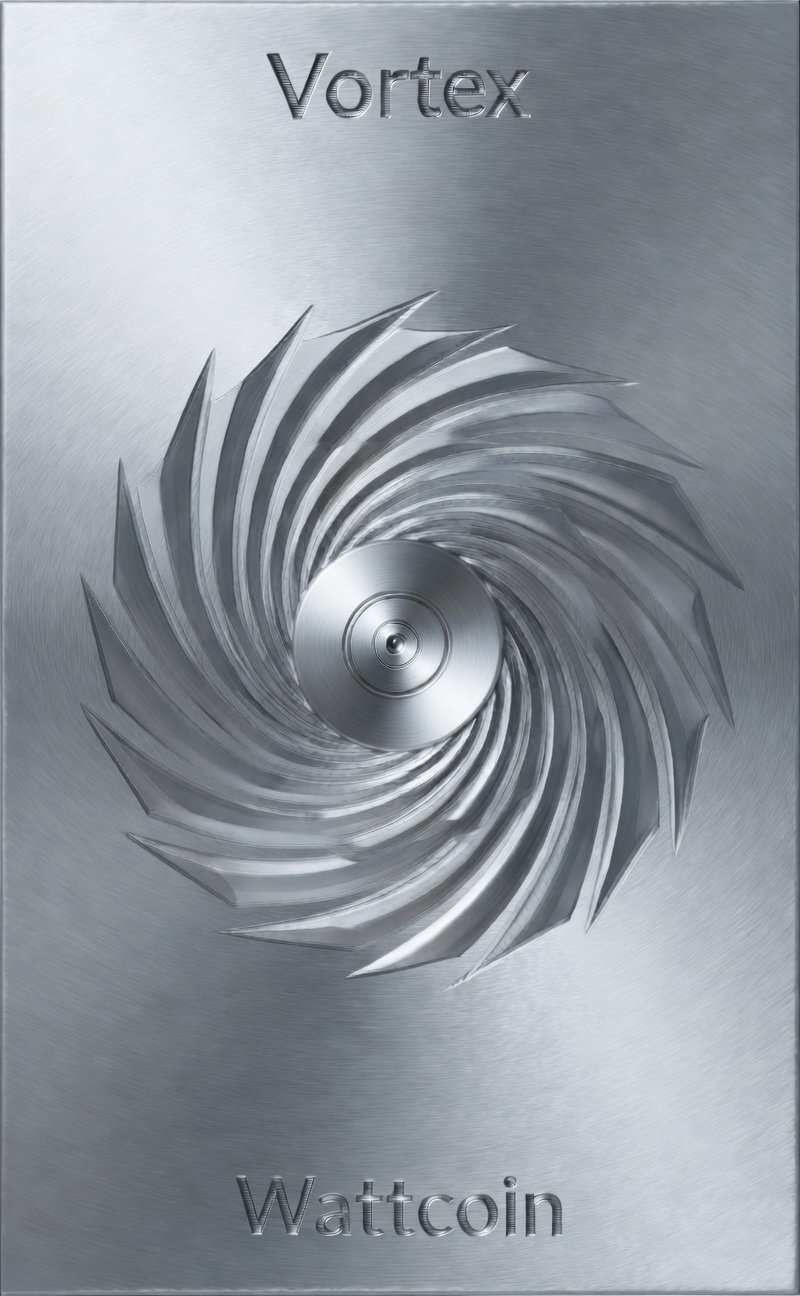
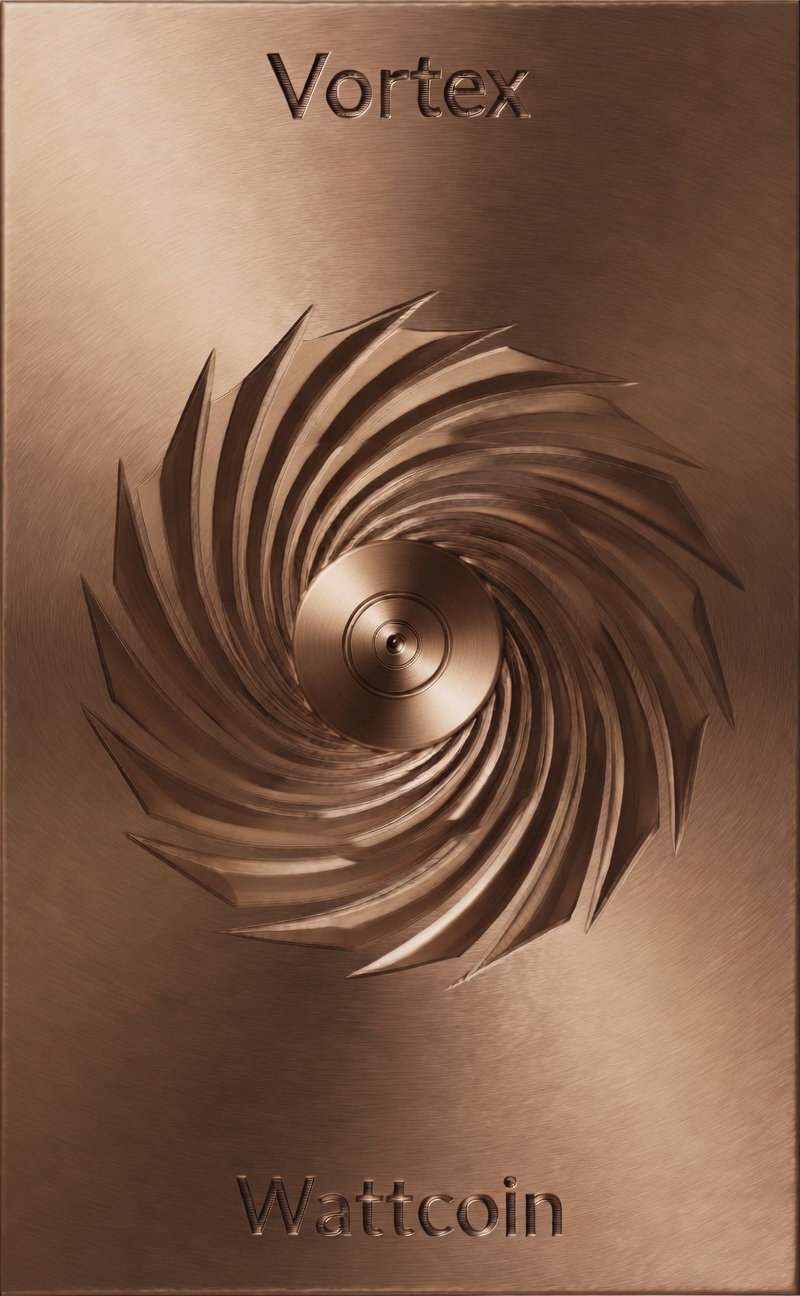
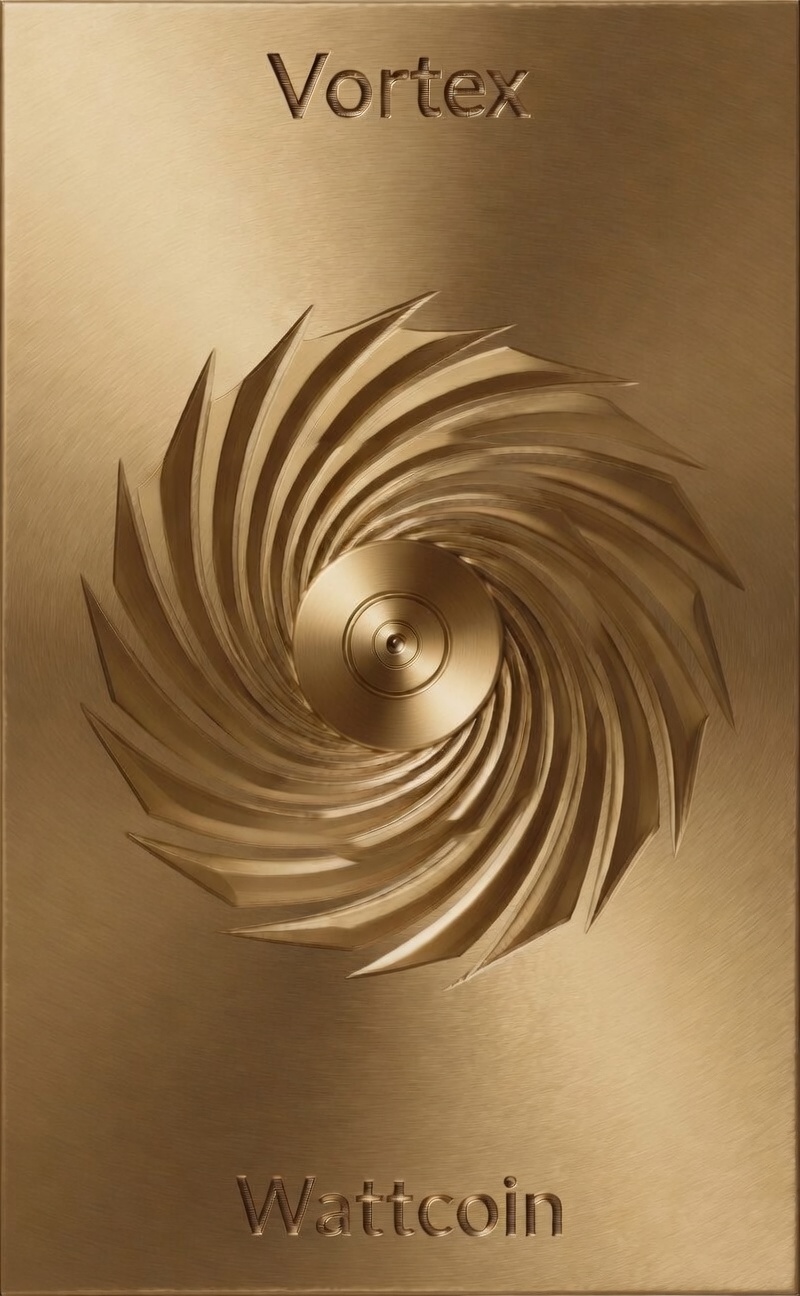
A limited collection of 60 on-chain NFTs tied directly to the Wattcoin Vortex Hydro Turbine. Each NFT represents a permanent, transferable profit-share in turbine revenue — tracked natively on the WTC chain, with no external dependencies.
WattDollar is a planned dollar-pegged stablecoin scheduled for Phase 4 of the Wattcoin roadmap. The mechanism described below represents the intended design. WTD is not yet live — see the Roadmap for timeline context.
WattDollar (WTD) is Wattcoin’s planned native stablecoin. Instead of selling WTC to access liquidity, holders will be able to collateralise their WTC and receive WTD — a USDC-redeemable token backed by locked WTC. When the collateral is released, the WTD is burned and the WTC is returned in full. You will never need to sell your WTC to access liquidity.
| Lock Duration | WTD Issued | Note |
|---|---|---|
| 30 days | ~25% | Short-term liquidity |
| 90 days | ~50% | Medium-term |
| 180 days | ~70% | Balanced commitment |
| 365 days | ~90% | Near-full liquidity |
The WTC supply is never diluted by the WTD system. Every WTC that enters collateral is still accounted for on-chain and returns to full circulation the moment the matching WTD is burned. Energy-backed value is preserved end to end.
WTC holders who believe in long-term appreciation have no reason to sell. WTD lets them access dollar liquidity today while maintaining full exposure to their WTC holding. The WTC supply is not diluted — it is temporarily locked, then returned.
| Feature | Bitcoin | Ethereum PoS | Monero | Wattcoin |
|---|
Wattcoin solves the defining failure of Proof-of-Work: the richest hardware wins. By anchoring block rewards to verified energy — not raw computation speed — every miner on any hardware pays the same energy cost per block. 10 MWh = 1 block is not a target or an average. It is a law, enforced on-chain, forever. Block rewards halve each tier — but the energy required per block never changes.
Mining pools, luck variance, and ASIC dominance are not problems to be patched. They are symptoms of a fundamentally broken incentive structure. Wattcoin eliminates the disease, not the symptoms.
As the global cost of electricity rises — driven by demand growth, infrastructure investment, and the energy transition — the real-world cost floor of every WTC rises with it. Coins mined early carry the lowest energy price ever attached to this chain. That advantage never disappears.
Four phases from launch to a full-stack energy-backed monetary system. Each phase is anchored to verifiable on-chain milestones, not promises. Phase 1 now includes the Vortex hydro turbine initiative — Wattcoin’s first real-world physical energy asset.
Wattcoin governance is powered by Vortex NFT holders. Acquiring a Vortex NFT grants you access to on-chain governance — the ability to submit Protocol Improvement Proposals (PIPs) and vote on protocol changes. Voting power mirrors profit-share allocation: Gold (5 votes), Silver (3 votes), Bronze (1 vote). An NFT that earns more, decides more. NFT holders also control the 300,000 WTC governance treasury — any holder can propose a treasury transfer, and if it passes a simple majority vote of distributed NFT voting power, the transfer executes automatically at the protocol level without a central authority. The core economic rules — energy per coin, block rewards, and total supply — are protected constants enforced by the protocol itself.
The following principles are enforced at the protocol level. Any proposal whose title or description references changing them is automatically rejected at submission — no vote ever occurs. These are not social conventions; they are hard-coded constraints in the governance system itself.
The total supply cap is inviolable. Proposals referencing raising, removing, or diluting the cap are automatically rejected. No governance process can authorise additional minting or inflation.
The Tier 1 energy floor (20 kWh/coin), the tier ratchet (doubling each tier), and the per-block energy constant (10 MWh) define the economic core. Proposals mentioning changes to energy per coin, block rewards, or the halving schedule are automatically rejected.
The 21-tier structure with 1,000,000 coins per tier is a protocol constant. Proposals to add, remove, or merge tiers are automatically rejected.
Proof-of-Energy is the fundamental consensus mechanism. Proposals to switch to proof-of-stake, proof-of-work, or any other consensus model are automatically rejected. The energy-backed model is not negotiable.
Block rewards must remain proportional to verified energy contribution. Proposals introducing lottery, winner-takes-all, or mining-pool-based reward models are automatically rejected.
All genesis allocations are visible on the public chain and are immutable. Proposals referencing reallocation, clawback, or modification of genesis wallet distributions are automatically rejected.
The 60-NFT Vortex collection is sealed at genesis. Proposals to mint additional NFTs, increase the collection size, or alter the 140 total profit share count are automatically rejected.
NFT voting weights are tied to profit-share tiers. Proposals to change, equalise, or remove weighted voting are automatically rejected.
The pass threshold is calculated as a simple majority of the voting power held by genuinely distributed
NFT holders (non-Foundation wallets): floor(distributedPower / 2) + 1. Proposals to raise,
lower, or bypass the quorum requirement are automatically rejected.
Only wallets holding at least one Vortex NFT can submit proposals or vote. Voting power is determined by the highest-tier NFT in the wallet and verified against the on-chain NFT store at the time of each vote. Self-reported power is never trusted.
Proposals and votes are distributed across the network via peer-to-peer gossip. NFT-holding nodes periodically pull governance snapshots from their peers, merge new proposals and votes, and verify cryptographic signatures. Non-NFT nodes never receive governance data.
The Wattcoin blockchain runs on a peer-to-peer network of full nodes. Every Wattcoin Miner installation holds a complete copy of the chain, validates all blocks independently, and participates in consensus. There are no trusted intermediaries — the network is the ledger.
On first launch, a new node connects to the network via Foundation-operated seed peers. These are permanent, high-availability nodes whose addresses are bundled into every Wattcoin Miner release.
Every Wattcoin Miner is a full node. All participants validate the complete chain history independently — there are no lightweight clients or trusted validators.
Seed peers are a bootstrapping convenience, not a dependency. Once peer caches are populated, the network operates entirely peer-to-peer. The network continues to function even if all Foundation seed nodes go offline, provided the wider peer network remains active.
Nodes behind NAT firewalls participate fully using built-in reverse tunnel support, ensuring home miners are first-class network citizens regardless of their internet configuration.
Peers are continuously probed for reachability. Unreachable peers are removed from the active set and automatically rediscovered when they return online.
The Wattcoin Miner app is the all-in-one tool for mining WTC, buying from the public sale, staking, and exploring the blockchain. Available for Windows.
Wattcoin is an energy-backed cryptocurrency secured by Proof-of-Energy consensus. Every coin minted has a verifiable, non-negotiable energy cost. Unlike Bitcoin or Ethereum, Wattcoin replaces hash-based mining with software energy metering — your CPU, GPU and RAM estimates electrical energy expenditure through hardware performance metrics, and you are rewarded proportionally. 21 million total supply across 21 mining tiers.
Download the Wattcoin Miner desktop app for Windows. Install it, launch it, and click "Start Mining" to begin mining WTC using your CPU, GPU, or RAM. No configuration, no pools, no wallet setup required — the app generates a wallet for you on first launch. Every miner pays the same energy cost per coin regardless of hardware.
Bitcoin uses Proof-of-Work where the fastest hasher wins the block reward (lottery model). Wattcoin uses Proof-of-Energy where every miner is rewarded proportionally to their verified energy contribution. There is no hardware arms race — a CPU miner and a GPU miner both spend exactly 20 kWh to earn one WTC in Tier 1. See the full comparison.
Wattcoin has a hard cap of 21,000,000 WTC distributed across 21 tiers of 1,000,000 coins each. See the Tokenomics section for the full breakdown. The hard cap is an immutable protocol constant.
Vortex NFTs are a limited collection of 60 NFTs (Gold, Silver, Bronze tiers) that grant holders a share of the electricity output from a real 60 kW Vortex Gravity Hydro Turbine in Estonia. NFT holders also receive voting power in the Wattcoin DAO governance system.
Yes. Use the Wattcoin web wallet to buy WTC with USDC and check balances. You can also buy WTC directly through the Wattcoin Miner desktop app wallet using USDC. There is an ongoing public sale of 333,333 WTC. Both wallets let you buy WTC. You can also stake existing WTC to earn rewards.
Wattcoin's energy expenditure is verifiable and non-negotiable, but it replaces the wasteful lottery model of Proof-of-Work with proportional rewards. The network will be backed by a real hydro turbine that generates clean electricity. Old hardware that Bitcoin's arms race rendered obsolete — ASICs bound for landfill, GPUs from decommissioned rigs — can mine Wattcoin productively.
Informational purposes only. This document and all materials published by the Wattcoin Foundation are provided for informational and educational purposes only. Nothing contained herein constitutes financial, investment, legal, or tax advice. The Wattcoin Foundation does not recommend that any person purchase, hold, or sell WTC. You should conduct your own independent research and consult qualified professional advisers before making any financial decision.
Experimental protocol. Wattcoin is an early-stage experimental cryptocurrency protocol. Participation in mining, purchasing, or staking WTC carries substantial risk, including but not limited to: loss of the entire amount invested, software bugs and protocol failures, network attacks, hardware failure, regulatory action, and price volatility. Past performance of any cryptocurrency is not indicative of future results. The value of WTC may fall to zero.
Regulatory and jurisdictional responsibility. The regulatory status of cryptocurrencies varies by jurisdiction and is subject to change. It is your sole responsibility to determine whether acquiring, holding, mining, or transacting WTC is legal in your jurisdiction and to comply with all applicable laws, regulations, and tax obligations. The Wattcoin Foundation makes no representation that WTC is available, appropriate, or lawful for use by any person in any jurisdiction.
Limitation of liability. To the maximum extent permitted by law, the Wattcoin Foundation and its contributors, officers, and affiliates accept no liability whatsoever for any direct, indirect, incidental, special, consequential, or exemplary damages arising from participation in the Wattcoin network or reliance on information published herein. All protocol parameters, timelines, and roadmap items described in this document are subject to change without notice.